Industry

Best Amazon Repricer in 2026: Honest Guide by Seller Type

Almost every page ranking for this query is a repricer vendor ranking itself first. We do not sell a repricer, so here is the referee version: every price checked against the vendor's live page on September 23, 2026, the free Amazon option treated seriously, and an honest answer to whether you need one at all.

DGDavid Gallo··15 min read·Last updated September 23, 2026
Best Amazon repricer software in 2026 compared by seller type — Aura for arbitrage and wholesale, BQool on a budget, Informed Repricer for flat-fee scale, Seller Snap for game-theory AI, Repricer.com for multichannel — with the Floor-First Rule for setting minimum prices from real landed cost
TL;DR

The best Amazon repricer in 2026 is Aura for arbitrage and wholesale sellers (AI, unlimited listings, from $37/mo annual), BQool for the lowest entry price ($25/mo), Informed Repricer for flat-fee scale ($199/mo, no caps), Seller Snap for game-theory AI, and Amazon's free Automate Pricing for simple rule-based needs. Single-offer private-label sellers usually do not need one — and no repricer helps until your minimum price reflects real landed cost. SellerForge (ours, from $49/mo) is that profit layer, not a repricer.

Search for the best Amazon repricer and you will notice something odd about page one: nearly every result is written by a repricer company, and nearly every one of them ranks itself first. Aura's blog crowns Aura. Repricer.com's blog crowns Repricer. The category is refereeing its own match.

SellerForge does not sell a repricer, so this page has no horse in that race. What follows is the referee version: five commercial tools plus Amazon's free one, every price verified against the vendor's live pricing page on September 23, 2026, and straight answers to the two questions the vendor listicles dodge — whether the free tool is enough, and whether you need a repricer at all. Where our product fits, it is the layer under a repricer, and we say so plainly in its own section.

Short answer up front: Aura for most arbitrage and wholesale resellers, BQool if budget decides, Informed Repricer if you want one flat fee with no caps, Seller Snap for high-volume game-theory AI, Repricer.com for multichannel, and Amazon's free Automate Pricing if your competitive exposure is small. And if you are a private-label seller who owns every listing alone — read the section written for you before paying anyone.
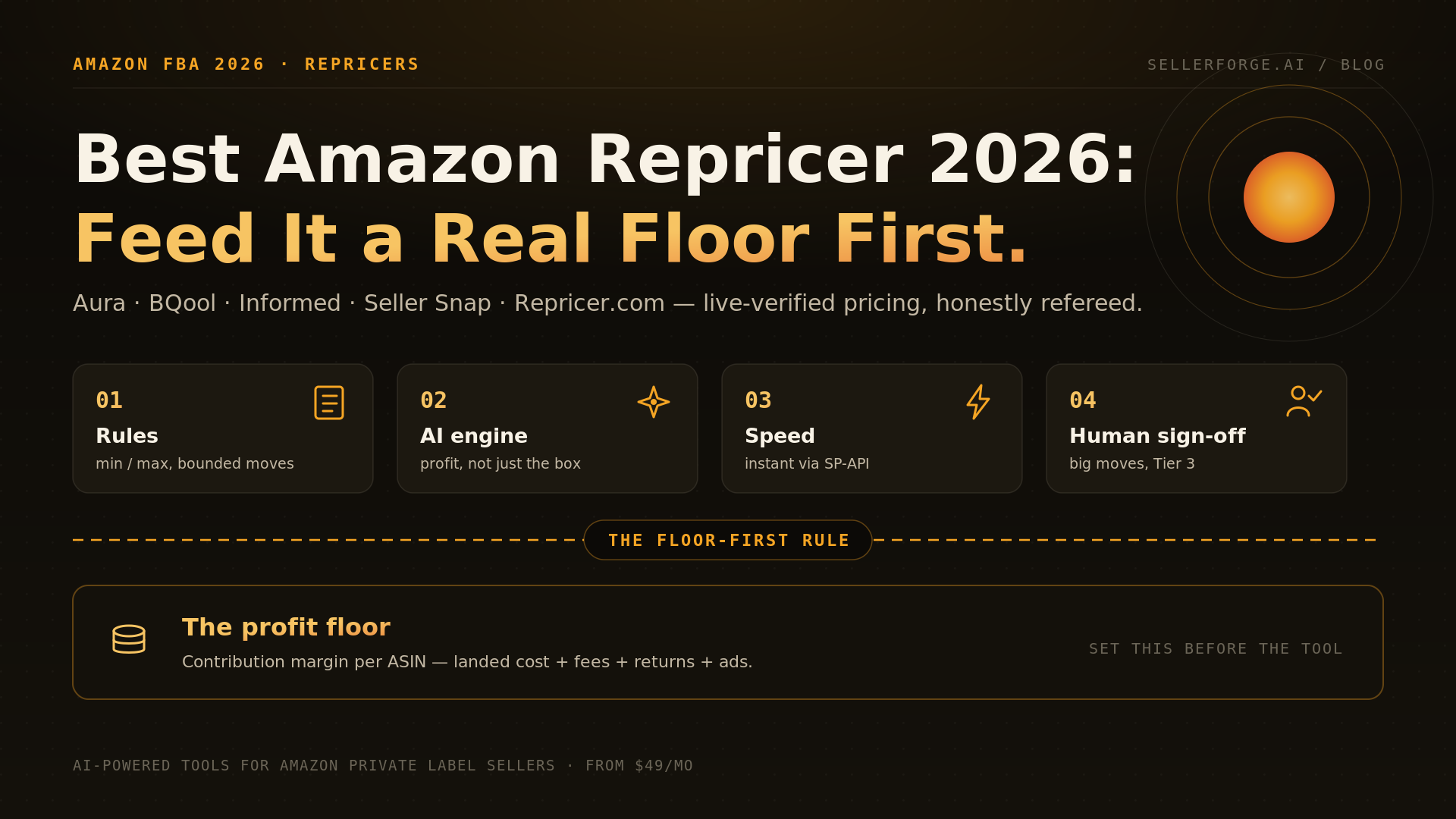
Best Amazon repricer software in 2026 compared by seller type — Aura, BQool, Informed Repricer, Seller Snap and Repricer.com mapped against the Floor-First Rule
A repricer exists because the Featured Offer — the Buy Box — concentrates almost all conversion on shared listings: roughly 82% of Amazon sales flow through it, a figure both Helium 10 and Repricer.com publish in the 80–83% range, and price remains one of the heaviest inputs to who holds it. When several sellers share one listing, whoever adjusts price intelligently and fastest tends to hold the box more hours per day. Manual repricing cannot compete with software that reacts to every competitor move around the clock.
But the 2026 algorithm rewards the whole offer, not just the lowest number — delivery speed, account health, and stock position all weigh in, which is why we wrote a full breakdown of how the Featured Offer actually works in 2026. A repricer moves exactly one of those levers. It moves it very well, and it cannot touch the others.

The Floor-First Rule: Set the Minimum Before You Pick the Tool

The Floor-First Rule: a repricer is exactly as smart as the minimum price you feed it. Every tool on this page — free or $499 a month — reprices inside a floor and ceiling you set. If that floor comes from a guess instead of your real landed cost, fees, returns, and ad spend, the fastest AI in the category will simply race you to breakeven more efficiently than you could have managed by hand.

  1. 1Compute the true floor per SKU: landed cost + Amazon fees (referral, fulfillment, storage, the 3.5% fuel surcharge) + returns allowance + your minimum acceptable margin.
  2. 2Set the repricer minimum at that floor — never at a round number, never at cost.
  3. 3Set a real maximum too: when competitors stock out, a good repricer should raise you toward it instead of leaving money on the table.
  4. 4Re-derive the floor quarterly, because Amazon's fee stack moves — the 2026 changes alone shifted per-unit costs on most catalogs.
Across the 57 accounts I managed, the repricing disasters were never the software's fault. They were floor failures: a min price copied from a spreadsheet that predated a fee change, or set from invoice cost with no returns allowance. The tools executed flawlessly toward a broken number. If you cannot state your contribution margin per ASIN today, fix that first — it is the whole argument of the ASIN Ceiling Rule — and it costs less than most repricer subscriptions.

The Best Amazon Repricers in 2026, Compared

The best Amazon repricer depends on your selling model: Aura for arbitrage and wholesale at growing volume, BQool for the lowest entry price, Informed Repricer for flat-fee predictability at scale, Seller Snap for game-theory AI, Repricer.com for multichannel, and Amazon's free tool for light needs. Every price below was checked against the vendor's live pricing page on September 23, 2026 — and the caps column matters more than the price column.

ToolVerified price (Sep 2026)The real capsBest for
Aura$37–$237/mo billed annually (Essential $77 annual / $97 monthly)Unlimited listings; tiers cap monthly SALES at $15K/$50K/$250K/$1M; Amazon + WalmartArbitrage and wholesale sellers scaling revenue
BQool$25–$300/mo (10% off annual)AI listings only 50 at $25, 100 at $50; each marketplace billed separately; Amazon onlyBudget entry under ~500 listings, one marketplace
Informed Repricer$199/mo flat ($99/mo under $5K revenue)Unlimited listings and users; no revenue caps; add-ons $29–$49; Amazon + WalmartScale sellers who want one predictable fee
Seller Snap~$100–$425/mo and up (annual-billed)SKU caps 1,000–15,000; revenue caps until Standard; 15-day trialHigh-volume sellers who want game-theory AI
Repricer.com$99–$499/moSKU caps 3,000–250,000; AI and Buy Box tools start at Scale ($299)Multichannel sellers (Amazon, eBay, Walmart, Shopify)
Amazon Automate PricingFree (Professional plan)Rule-based only; no competitor analytics; mostly follows price downLight competitive exposure, first repricer
SellerForge (ours — not a repricer)From $49/mo (Core $49 / Growth $99 / Pro $199 / Agency $499)The profit layer that computes your floor — pair it WITH any tool aboveKnowing the contribution margin your min price must protect

Read the caps, not the headline price. BQool's $25 covers 50 AI listings on one marketplace. Aura's $77 is unlimited listings but caps monthly sales at $50K. Informed's $199 caps nothing. Three different philosophies — and the cheap one is only cheap at small scale.

Aura vs BQool: The Reseller's Real Decision

Aura versus BQool is the choice most arbitrage and wholesale sellers actually face, and the 2026 answer changed because Aura changed its structure. Aura wins on architecture for anyone growing; BQool wins on absolute entry price and loses ground as catalogs and marketplaces multiply.

Most roundups still describe Aura as "$97 a month for up to 50,000 listings." That is stale. Aura's live pricing page now sells four tiers by monthly sales volume — Starter $37 (to $15K/mo in sales), Essential $77 (to $50K), Plus $157 (to $250K), Pro $237 (to $1M), all billed annually at 20% off the monthly rate — with unlimited listings and its Maven AI on every plan. You stop paying for catalog size and start paying for success, which is a better trade for high-SKU, low-velocity models like used books or broad OA catalogs.
BQool's Repricing Central starts at a genuine $25/mo, and its conditional repricing (inventory-age and days-of-supply rules) is sophisticated for the price. The catches sit in the fine print: the $25 tier includes only 50 AI-powered listings (1,000 rule-based), AI Deluxe at $50 includes 100, and every marketplace is sold separately — a US + Canada + EU seller pays three times. BQool also reprices Amazon only. Under roughly 500 listings on one marketplace it is honest value; beyond that, price out Aura or Informed before renewing.

Is Amazon's Free Automate Pricing Tool Good Enough?

For a meaningful share of sellers, yes — and almost no vendor listicle says so. Automate Pricing is free with a Professional selling plan, offers predefined and custom rules (competitive Featured Offer, lowest-price, sales-velocity, and Business-pricing types), respects minimum and maximum bounds you set per SKU, and its changes do not count against your daily price-update allotment.
  • Start with Automate Pricing if: you have under ~20 competitive listings, you mostly need to stay inside the Featured Offer range, and you check your account weekly anyway.
  • Outgrow it when: you need prices raised automatically as competitors stock out, you want profit-optimizing AI rather than rules, you need competitor analytics and history, or repricing decisions move real revenue daily.
  • Its structural bias: like most rule engines, it is better at following the market down than at harvesting margin on the way up — the exact behavior paid AI tools compete on.

The honest sequencing for a new reseller: run the free tool for a quarter, measure your Featured Offer share and margin, then trial one paid tool and compare the same numbers. Every commercial repricer on this page offers a 14- or 15-day free trial precisely because that comparison usually sells itself — in one direction or the other.

Do Private-Label Sellers Need a Repricer at All?

Mostly no — and this is the question the vendor roundups answer worst, because the honest answer shrinks their market. If you own every listing and no other seller ever appears on it, there is no Buy Box rotation to win. You hold the Featured Offer by default until a suppression event or a hijacker takes it, and neither problem is solved by repricing software.

The private-label cases where a repricer genuinely earns its fee: resellers or hijackers share your listings and you need to stay competitive on your own brand; you run a hybrid catalog with wholesale or arbitrage SKUs alongside the brand; or you want sales-velocity pricing that walks price up and down to hit inventory targets before a capacity deadline. Outside those, a private-label seller's pricing problems are strategic — margin, elasticity, promotions — and a subscription that reacts to competitors you do not have is shelf-ware.

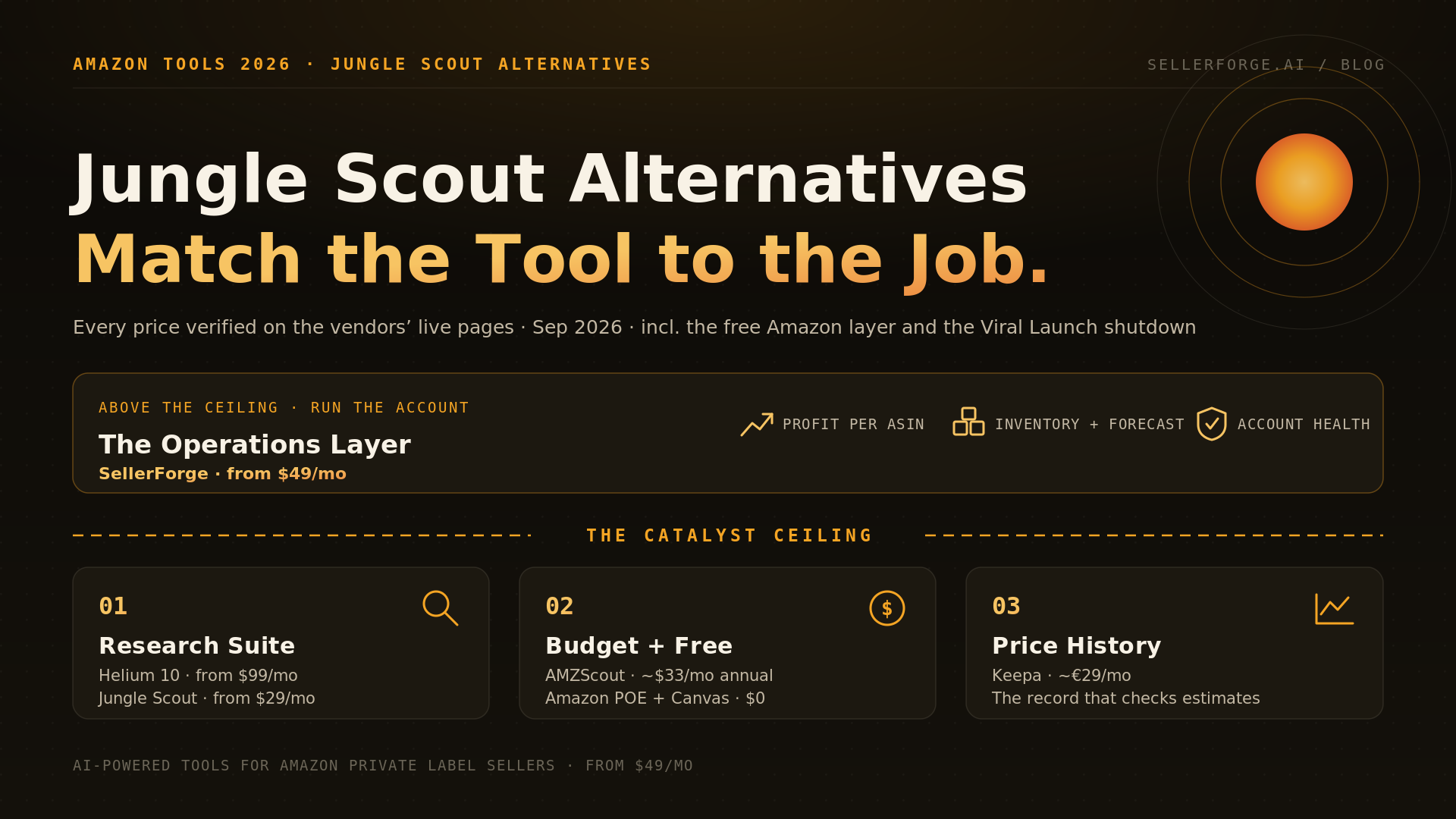
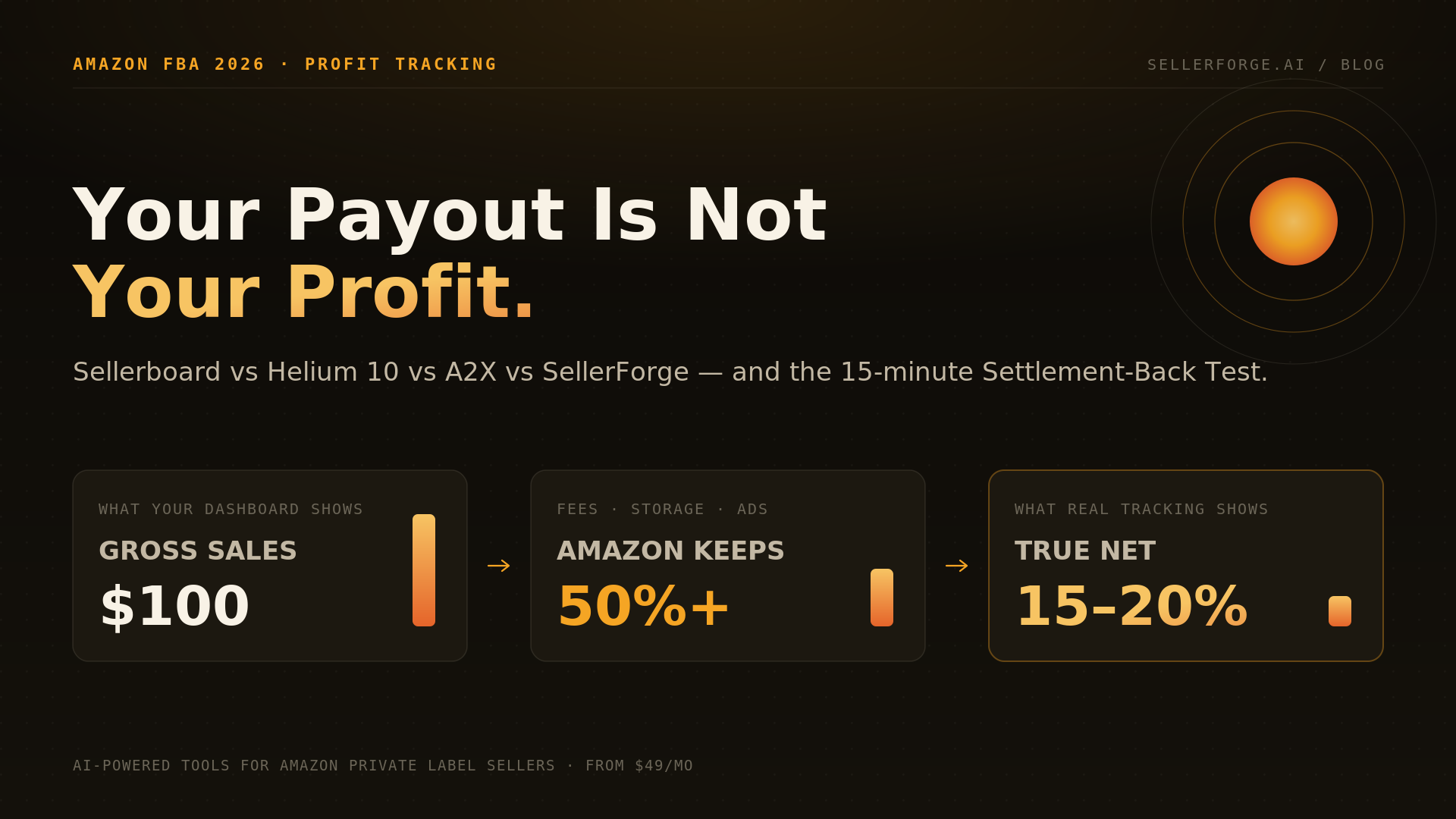
What private-label sellers DO need is the thing resellers need before a repricer: the true profit floor per ASIN. Price changes you make by hand still need to clear landed cost, the 2026 fee stack, returns, and advertising — the arithmetic our profit-tracking software guide calls the Settlement-Back Test. Suppression and hijacker defense, meanwhile, live in the Buy Box defense checklist, not in a repricer.

Is Automated Repricing Still Allowed? The 2026 Agent Policy

Yes — with new paperwork. Amazon's updated Business Solutions Agreement, effective March 4, 2026, added an Agent Policy that tiers automated actions by impact: routine repricing within your defined parameters sits in the lowest tier with minimal restrictions, moderate actions like bid changes require rate limiting and audit logging, and high-impact actions — including large price changes — require a human authorization step, per PPC Land's analysis of the March 4 deadline. Automation must run through a registered SP-API application.

Practically, this changes nothing for sellers using the tools on this page — all of them operate through the SP-API — and validates the pattern good operators already run: bounded automation for small moves, human sign-off for big ones. What it does end is the gray market of scraper-based pricing bots. If a tool cannot tell you it runs on a registered SP-API app, that is a disqualifier in 2026.

Where SellerForge Fits (and Where It Does Not)

Disclosure: SellerForge is our product, and it is not a repricer. We do not compete for the Buy Box minute by minute, and if that is the job, buy one of the five tools above. SellerForge is the layer the Floor-First Rule depends on: an AI command center that knows what each ASIN actually earns, from $49/mo (Core $49 / Growth $99 / Pro $199 / Agency $499, 7-day trial).

Concretely: Custom Breakdowns computes contribution margin per ASIN after fees, returns, and ads — the number your repricer minimum has to protect; the Weekly Business Report shows when repricing activity is buying revenue at margin's expense; Reimbursement Claims recovers the fee errors that silently corrupt your floor math; and the MCP connector lets you ask an AI assistant "which SKUs are priced below true breakeven?" against your live account — the workflow our Seller Central MCP guide walks through. Interesting 2026 footnote: Informed Repricer now ships its own AI MCP Server on the Pro plan — the repricing category is heading the same direction. Whether we are worth it for your account is a fair question with its own honest page.

Who Should Pick What: The Bottom Line

Match the tool to your selling model and scale, not to a vendor's own ranking. The table below is the whole guide in one decision — and for the full category-by-category stack beyond repricing, see the best Amazon seller tools roundup.
Your situationPickWhy
New reseller, few competitive listingsAmazon Automate Pricing (free)Zero cost while you learn what your Featured Offer share is worth
OA/RA seller, under ~500 listings, one marketplaceBQool Basic or Deluxe ($25–$50/mo)Lowest real entry price; conditional rules punch above the fee
Arbitrage or wholesale, growing past $15K/moAura (from $37/mo annual)Unlimited listings, AI on every plan, cost scales with sales not SKUs
High-volume, hates variable costsInformed Repricer ($199/mo flat)No listing, user, or revenue caps; no percentage of sales — ever
Large catalog, crowded competitionSeller Snap (from ~$100/mo annual)A decade of game-theory AI aimed at profit, not just the box
Multichannel (Amazon + eBay/Walmart/Shopify)Repricer.com (from $99/mo)The one built to lead price on Amazon and replicate everywhere else
Any of the above+ SellerForge (ours, from $49/mo)The profit floor every tool above needs to be told

One pattern from 57 accounts to leave you with: the sellers who made money with repricers treated them like power tools — sharp, fast, and pointed only after the measuring was done. The ones who lost money bought speed first and discovered their floor was wrong at scale. Measure first. The software will still be there in an hour.

Want the floor before the speed? Start a free SellerForge trial — connect your account and see contribution margin per ASIN, fee errors, and the minimum price each SKU can actually afford. From $49/mo, and it works alongside every repricer on this page.

About the author

David Gallo is the founder of SellerForge.ai. He previously managed 57 Amazon seller accounts representing over $350M in sales at Worldfront — where more than one "repricer problem" turned out to be a min price nobody had updated since the last fee change.

Frequently Asked Questions

For most resellers, Aura is the strongest all-around pick in 2026 — AI repricing with unlimited listings from $37/mo billed annually, capped by monthly sales volume instead of listing count. BQool is the budget entry at $25/mo, Informed Repricer is the flat-fee choice at $199/mo with no revenue or listing caps, Seller Snap leads on game-theory AI for high-volume sellers, and Repricer.com fits multichannel sellers on Amazon plus eBay and Walmart. There is no single best — the right pick tracks your catalog size, revenue, and how many marketplaces you compete on.
For simple needs, yes. Automate Pricing is free with a Professional selling plan, applies predefined or custom rules inside minimum and maximum bounds you set, and its price changes do not count against your daily price-update allotment. Its limits: it is rule-based only, it mostly follows competition downward rather than raising prices when competitors leave, and it gives you no competitor analytics. Sellers with a handful of competitive listings should start there; sellers whose revenue depends on Featured Offer share daily usually outgrow it.
Usually not in the way resellers do. If you own your listings and no other seller ever appears on them, there is no Buy Box rotation to win — your pricing decisions are strategic (margin, velocity, promotions), not reactive. A repricer earns its fee for private label mainly when hijackers or authorized resellers share your listings, or when you want sales-velocity rules that move price to hit inventory targets. For everyone else, the higher-leverage spend is knowing your true contribution margin per ASIN so any price you set protects profit.
Verified against live vendor pages in September 2026: BQool starts at $25/mo (50 AI listings, each marketplace billed separately), Aura runs $37–$237/mo billed annually with tiers set by monthly sales volume ($15K to $1M), Repricer.com runs $99–$499/mo by SKU count, Informed Repricer is a flat $199/mo with unlimited listings ($99/mo under $5K revenue), and Seller Snap runs about $100–$425/mo and up. The pattern: cheap entry prices scale up fast with listings, marketplaces, or revenue — read the caps, not the headline price.
Rule-based repricing executes instructions you write: beat the lowest FBA offer by $0.10, match the Buy Box, stay inside min and max. It is predictable and cheap, but it only knows what you told it. AI or algorithmic repricing decides tactics itself — testing price levels, holding or raising price when competitors disappear, and optimizing for profit or Buy Box share rather than just undercutting. AI matters most in crowded, fast-moving competition; rule-based is often enough when you face a few slow-moving competitors.
Yes. Amazon's updated Business Solutions Agreement, effective March 4, 2026, formalized an Agent Policy for automation: routine actions like repricing within your defined parameters sit in the lowest-impact tier and are allowed with minimal restrictions, provided the tool runs through a registered SP-API application. Large price changes fall into the high-impact tier that requires a human authorization step. Every major commercial repricer operates through the SP-API, so the practical rule is: set real minimums and maximums, and keep a human sign-off on big moves.
Aura wins on structure for growing sellers: unlimited listings on every plan with AI included, so costs rise only as your monthly sales cross $15K/$50K/$250K tiers. BQool wins on entry price at $25/mo — but that tier includes only 50 AI-powered listings, each marketplace is billed separately, and BQool reprices Amazon only. A seller with a large catalog on a cheap BQool tier is mostly getting rule-based repricing with an AI label. Under roughly 500 listings on one marketplace, BQool is real value; beyond that, price out Aura.
Yes, when you share listings with other sellers — price is still a heavy input to the Featured Offer algorithm, and roughly 82% of Amazon sales run through that placement, per figures Helium 10 and Repricer.com both publish. A repricer keeps your offer inside the competitive range around the clock and, done well, raises your price when competition thins instead of racing to the bottom. What it cannot fix: slow delivery promise, poor account health, or a minimum price set below your true costs — the algorithm rewards the whole offer, not just the number.
DG
David Gallo·Founder, SellerForge

Amazon seller with 12+ years managing private label brands across 57 accounts and $350M+ in sales managed.

Share this article

Get Amazon seller insights in your inbox

Practical strategies, SP-API updates, and AI tooling tips — no fluff.

No spam, ever. Unsubscribe anytime.

Stop reading. Start shipping.

SellerForge turns these playbooks into one-click AI workflows — from $49/month.

No credit card required